PRINTABLE HANDWRITING WORKSHEETS

Handwriting practice sheets

Choose names and short words, letters or numbers to practise. Adjust your worksheet, check the preview, and download a free PDF.

How to use handwriting practice sheets

What would you like to practise?

Type a name or short word, then choose the row count, tracing style and paper size. The preview shows the sheet you will download.

Worksheet essentials

Download worksheet

Edit
Paper size

Tracing style

Active worksheet

Emma tracing worksheet

EmmaEmmaEmmaEmmaEmmaEmmaEmmaEmmaEmmaEmmaEmmaEmmaEmmapapergens.com

Next practice

Draw & write

Choose picture paper when the learner is ready to add their own words. The blank box separates the drawing from the lined writing area, making it useful for a caption, a sentence about a picture, or a short classroom story. This layout has no tracing text; open the editor if you need to change the line spacing or drawing area.

Open the story paper template →

Choose a sheet that fits the task

Start with the skill you want to practise today. Tracing sheets provide a model to follow; blank handwriting paper leaves space for independent writing. A learner may use both in the same lesson.

Names and familiar words

A name is a useful first custom sheet because the text is already familiar. You can also enter one sight word or a short spelling word. Keep the text short enough to leave clear gaps between repetitions; if a phrase looks cramped in the preview, split it into separate sheets. Adjust the rows to the amount of practice you need.

Open the name tracing tool →

Letter formation

Pick the letters that need attention rather than printing the whole alphabet every time. Uppercase and lowercase have different shapes, so practise them separately or compare the two on a sheet. The alphabet tool uses Latin letters; check the preview before choosing a sheet for another writing system. These are tracing guides, without numbered stroke instructions.

Open the letter tracing tool →

Digits and number sequences

Use a single digit for repeated formation practice, or a short sequence such as 1–5 when the task also involves counting. Check that every row leaves room for the learner to write. A tracing number sheet supports writing practice; it does not replace a counting activity or a number line.

Open the number tracing tool →

Need blank lines instead of tracing?

Choose a ready-made sheet when you want to write freely. Primary paper has a middle guide; cursive paper supplies writing lines without teaching a particular cursive alphabet.

How to use handwriting practice sheets

Move from tracing a model to writing without it. Choose letters, short words or a name, and keep each practice session focused on one writing habit.

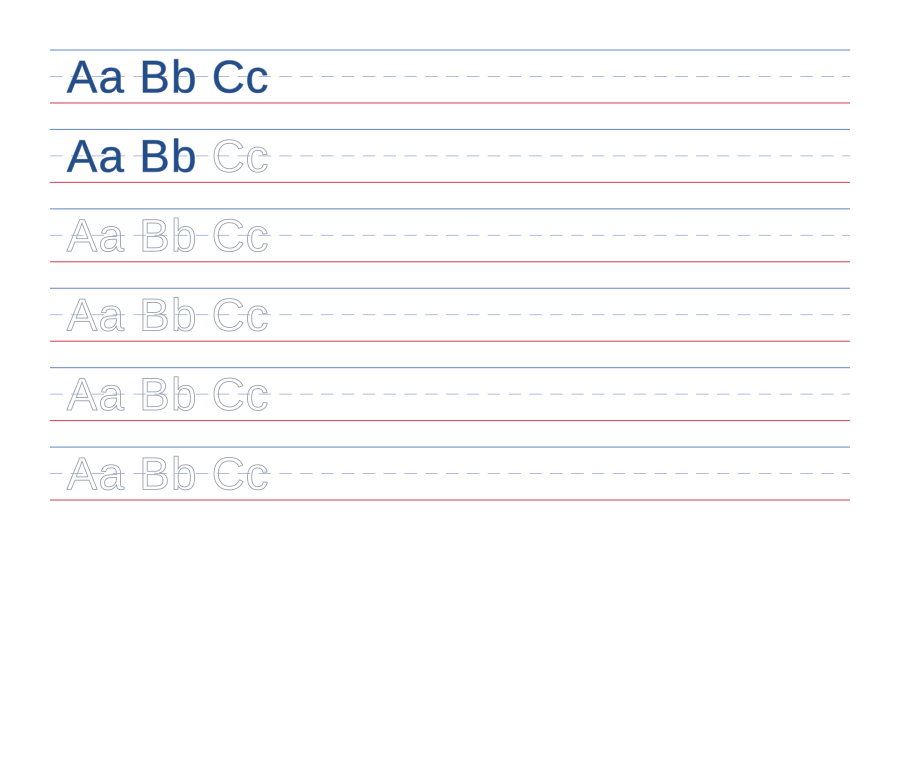
Handwriting guides with two blue completed rows and light tracing models
Example in use. The first rows show tracing; the remaining rows leave room for another attempt.This is a usage illustration. Customize the sheet above before downloading.
  1. Choose a clear writing model

    Enter a short word or letter group. Keep the guides on and choose a size the learner can follow comfortably.

  2. Trace, then try beside the model

    Show where the letter starts. Trace one row slowly, then copy the same shapes in the unused space on the line.

  3. Compare one thing at a time

    Look at letter height, spacing or the baseline. Circle one successful attempt before making a fresh sheet.

Try this. Fewer careful rows are more useful than a rushed full page. Slant guides help show direction; they do not change the letter shapes.

Try personalized name activities

Print the sheet at the intended size

Letter or A4

Choose the size that matches the paper in your printer. Letter is 8.5 × 11 inches; A4 is 210 × 297 mm. The preview and downloaded PDF use the selected size.

Use actual size

Print at 100% or Actual size to preserve the guide spacing. Fit to page can shrink the worksheet. If a printer cannot reach the margins, inspect the print preview and adjust the margins in the editor.

Check one page first

Print a sample before making classroom copies. Check that the dotted or outlined letters and middle guides are visible. Use the worksheet controls to change tracing style or guides, or the editor for further layout adjustments.

Handwriting worksheet questions

Can I make a sheet with my own name or words?

Yes. Choose Names & words and enter a name, a short word or a brief phrase. You can change the rows, tracing style and guides. The preview updates before you download the worksheet.

Does this make cursive tracing worksheets?

The name, letter and number tools use print-style tracing. The cursive handwriting paper link provides blank lines for cursive practice; it does not generate a joined cursive alphabet or stroke instructions.

Can I practise uppercase and lowercase letters?

Yes. Choose Letters, enter the Latin letters you need, and select uppercase, lowercase or both. Use a few letters at a time if a full alphabet becomes crowded in the preview.

Do I need an account to download the PDF?

No account is needed for these worksheet downloads. The tracing tools offer PDF, PNG and SVG; picture paper has a PDF download and an editor link for further changes.

Which sheet should I use after tracing?

Try blank primary-lined paper to copy the same word without tracing. Picture paper adds a drawing box for captions and sentences. Choose the layout by the writing task and the amount of guidance the learner still needs.